
Why SEO Campaigns Fail More Often Than Expected
Most businesses don’t start SEO campaigns expecting them to fail.
Businesses investing in SEO services in Hyderabad often expect steady growth, but results can become inconsistent when structural gaps are not addressed.
They invest time, budget, and effort with a clear expectation — improved rankings, more traffic, and consistent lead generation. In the early stages, there is often progress. Keywords begin to appear, impressions increase, and traffic starts to move.
And then something changes.
Growth slows. Rankings fluctuate. Results become inconsistent. In some cases, visibility drops without any obvious reason.
This pattern is not uncommon. It is one of the most observed outcomes across SEO engagements, regardless of industry.
The question is not whether SEO works. It does.
The question is: why do so many SEO campaigns fail to deliver sustained results?
The answer is rarely a single mistake. It is usually a combination of structural gaps that prevent search engines from confidently evaluating a website’s relevance and authority.
SEO Success Is Not Linear — And That’s Where Most Expectations Break
SEO is often misunderstood as a linear process.
More content → better rankings
More backlinks → higher authority
More optimization → better results
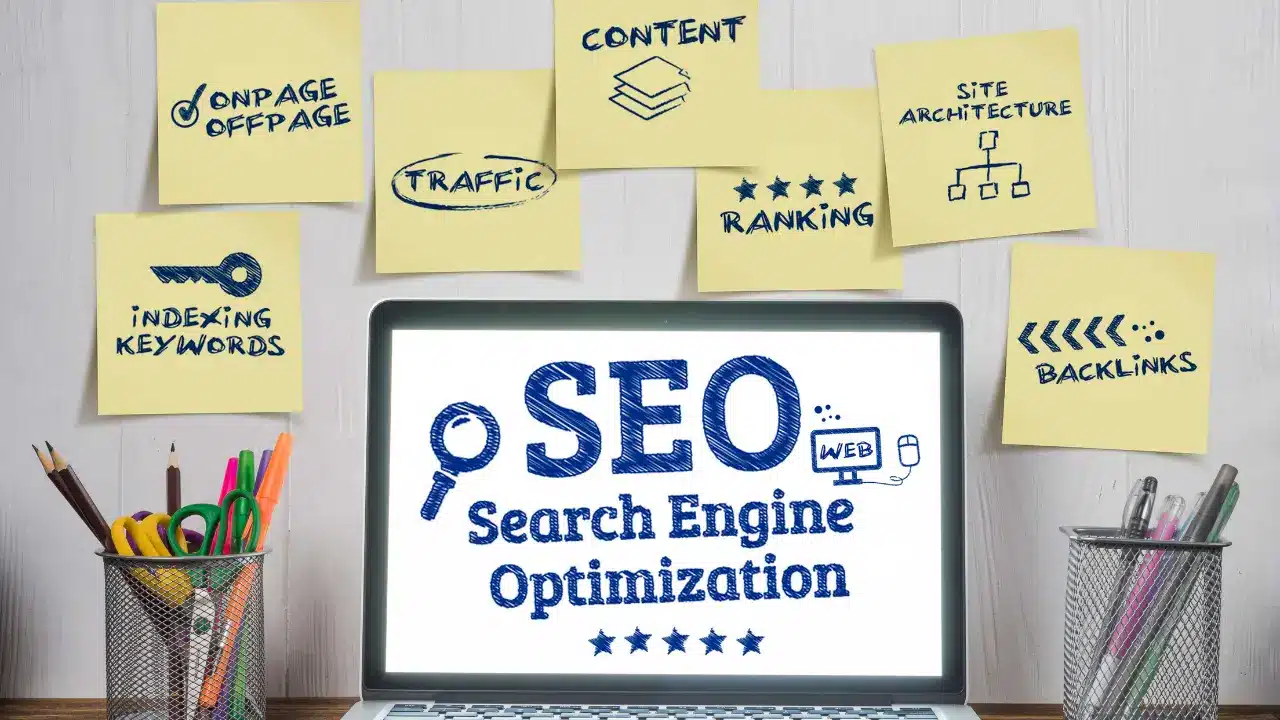
In reality, search performance behaves more like a system.
Multiple signals interact simultaneously:
- content relevance
- internal structure
- technical health
- user behavior
- external authority
When one part of the system is misaligned, the entire system becomes unstable. Sustainable growth often depends on digital marketing strategy services that connect SEO with broader business and marketing objectives.
This is why many businesses experience initial growth followed by stagnation. Early improvements often come from basic optimizations. But sustained growth requires deeper structural alignment.
Without that, progress plateaus.
The Gap Between Activity and Outcome
One of the most common patterns across SEO campaigns is the difference between what is being done and what is actually improving rankings.
Many campaigns are active. Content is being published. Keywords are being tracked. Reports are being shared.
But activity does not guarantee progress.
Search engines evaluate outcomes, not effort.
For example, publishing multiple blog posts does not automatically increase authority unless those posts:
- align with search intent
- connect through internal linking
- support a larger topical structure
Similarly, optimizing meta tags or headings has limited impact if the underlying content does not satisfy user expectations.
A campaign can appear productive while producing minimal ranking impact.
Why Search Engines Hold Back Rankings
Search engines do not rank pages simply because they exist or are optimized. They rank pages when they are confident in three key areas:
- relevance
- authority
- consistency
Relevance determines whether the content matches user intent.
Authority signals whether the website can be trusted.
Consistency reflects whether signals remain stable over time.
If any of these elements are unclear, rankings become volatile.
For instance:
A page may be relevant but lack authority → it struggles to rank
A page may have authority but unclear intent → it ranks inconsistently
A page may perform well temporarily but lacks consistency → it drops
This explains why SEO campaigns often show movement but fail to sustain it.
The Role of Structure in SEO Stability
SEO campaigns often focus heavily on individual elements — keywords, content pieces, backlinks — but overlook structure.
Structure determines how search engines interpret a website as a whole.
A well-structured website:
- groups related topics logically
- connects pages through internal links
- reinforces core themes
- avoids competing signals
Without structure, even high-quality content becomes fragmented.
This fragmentation leads to:
- diluted authority
- keyword overlap
- unclear topical signals
DIGITALOPS has observed across multiple audits that websites with strong structure often outperform competitors with higher content volume.
The difference is not quantity. It is coherence.
Why Content Alone Doesn’t Solve SEO
Content is often treated as the primary driver of SEO success.
While content is essential, it is not sufficient on its own.
Publishing more content without a clear framework creates noise.
Search engines prioritize depth and clarity over volume. They evaluate how well a website covers a topic, not how many pages it publishes.
For example:
A website publishing 50 loosely connected articles may perform worse than one publishing 15 highly structured, interlinked pages.
The goal is not expansion. It is consolidation of authority.
The Influence of User Behavior
Search engines increasingly rely on user behavior signals.
These include:
- click-through rates
- time spent on page
- interaction patterns
- return visits
If users land on a page and leave quickly, it signals a mismatch between expectation and content.
Even technically optimized pages may struggle if they fail to engage users.
This introduces a layer of complexity. SEO is no longer just about search engines. It is about how users interact with content once they arrive.
Why SEO Campaigns Lose Momentum Over Time
Many campaigns show early progress and then slow down.
This is often due to diminishing returns from basic optimizations, which is one of the most common reasons SEO strategies lose momentum over time.
Initial improvements typically come from:
- fixing technical issues
- improving page structure
- targeting obvious keywords
Once these are implemented, further growth requires:
- deeper content strategy
- authority building
- competitive differentiation
Without evolving the strategy, campaigns enter a plateau phase. This is also why many businesses experience challenges, which we explore in detail in our analysis of why SEO rankings drop unexpectedly.
How DIGITALOPS Approaches SEO Differently
DIGITALOPS approaches SEO as a structured system rather than a checklist of tasks.
Campaigns are designed around:
- clear topic clusters
- intent-based keyword mapping
- internal linking frameworks
- performance-based iteration
Instead of focusing on isolated actions, the emphasis is on how different elements interact.
This approach reduces volatility and improves long-term stability.
Businesses working with SEO services in Hyderabad and across India often experience inconsistent results when campaigns lack this level of structure.
SEO Is a Signal Game, Not a Task List
Every SEO activity sends a signal to search engines.
Content sends relevance signals.
Backlinks send authority signals.
User behavior sends engagement signals.
The effectiveness of a campaign depends on how these signals align.
When signals conflict, search engines hesitate.
When signals reinforce each other, rankings improve.
Understanding this is key to avoiding failure. Search engines evaluate multiple signals together, not just individual ranking factors — something we explain in how Google evaluates pages.
What This Means for Businesses Investing in SEO
Businesses across different markets, including those exploring SEO services in India, often encounter similar structural challenges.
Businesses evaluating SEO performance often look at:
- rankings
- traffic
- leads
But the more important question is:
Are the underlying signals improving?
Sustainable SEO success comes from:
- clarity of intent
- strength of structure
- consistency of signals
A digital strategy that focuses only on visible metrics without addressing underlying structure will struggle to maintain growth.
What This Means for Businesses
SEO campaigns rarely fail because of a lack of effort. They fail because effort is not aligned with how search engines evaluate websites.
Understanding this distinction changes how SEO should be approached.
A digital strategy built on structure, clarity, and consistent signals is far more effective than one built on isolated activities.
For businesses working with a digital marketing agency or exploring SEO services in Hyderabad or India, the goal should not be more activity — it should be better alignment.
That is where long-term growth comes from.
FAQs
Why do SEO campaigns fail even when content is regularly published?
Because content alone does not build authority unless it is structured, interconnected, and aligned with search intent.
How long does it take for SEO to show consistent results?
SEO typically shows early movement within a few months, but stable and scalable results often take longer depending on competition and strategy.
Can technical SEO issues cause campaign failure?
Yes, technical issues can limit how search engines crawl and interpret a website, affecting overall performance.
Do backlinks guarantee SEO success?
Backlinks contribute to authority, but without relevance and content alignment, they do not ensure sustained rankings.
How can businesses avoid SEO campaign failure?
By focusing on structured strategy, aligning content with intent, and ensuring consistency across all SEO signals.
About the Source
The observations in this article are drawn from hands-on SEO audits and campaign analysis conducted by DIGITALOPS across multiple industries in Hyderabad, India, and select international markets. As a digital marketing agency working on real-world SEO campaigns, consistent patterns emerge in how search engines evaluate websites and why certain efforts fail to sustain rankings.
This perspective reflects real campaign behavior rather than theoretical models, focusing on how structured SEO strategies, intent alignment, and signal consistency influence long-term performance. These insights are shaped by practical execution across projects involving SEO services in Hyderabad and broader competitive markets.